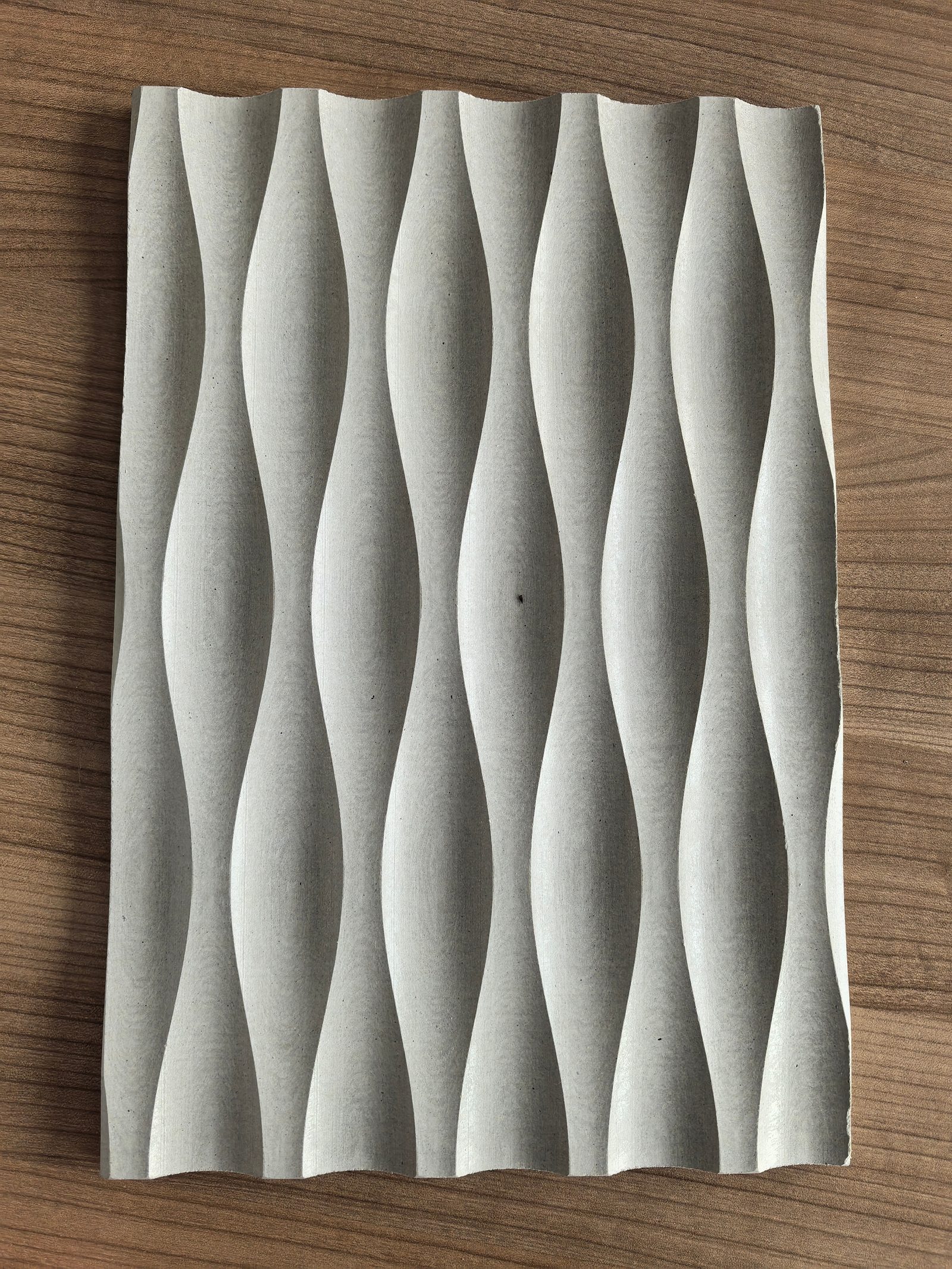
Construction is industrializing. Prefabricated volumetric modules (MiC — Modular Integrated Construction) and panelized interior systems move the work from unpredictable job sites into controlled factories. That shift changes what a wall substrate must be. It is no longer enough to perform in a building; the board must perform on a production line, a truck, and a crane — then click into place on site. Crystal Board is engineered exactly for that journey.
What Prefab Demands of a Substrate
- Light weight. Every kilogram added in the factory multiplies across transport, lifting, and structural allowance.
- Dimensional stability. Modules are built to tight tolerances; a substrate that swells or warps wrecks the fit.
- Dry installation. Factories want no wet trades — no plaster, no curing, no weather delays.
- Fire & moisture performance. Modules ship and stack; a single weak material becomes a systemic risk.
- Processability. CNC cutting, routing, and rapid fixing without specialist tooling.
Why Crystal Board Fits
| Prefab need | Crystal Board answer |
|---|---|
| Low transport weight | Flagship 0.85 g/cm³ — 30–40% lighter than standard FC board |
| Dimensional stability | Inorganic, moisture-proof; no swell or warp in factory humidity |
| Dry, fast install | Flat ready-finish surface; utility-knife cut; nail/screw directly |
| Fire safety in transit & use | A1 non-combustible + CE; AQ1 safe smoke |
| One material, many parts | Serves walls, ceilings, linings, and duct wrap — simplifies BOM |
| Factory processability | CNC-friendly; consistent density and thickness |
Where It Is Used in Modular Builds
- Partition & wall cassettes: light-steel framed Crystal Board panels delivered complete.
- Ceiling cassettes: A1-rated, low-load ceilings for modules.
- Bathroom & wet pods: moisture-proof substrate that tolerates pod humidity without rot.
- Facade & balcony linings: stable, non-combustible backing behind finishes.
- HVAC & service chases: lightweight fire wrap for duct and penetration protection.
Proven at Scale
Zhongjing boards have been specified in large modular and prefabricated projects — including modular building programs exceeding 100,000 m² of applied board — where consistent quality, light weight, and fire compliance were decisive. The same properties that suit a single home renovation scale cleanly to an industrial production line.
Prefab Advantage Summary
- Lighter modules → lower logistics & crane cost
- Stable panels → tighter factory tolerances
- Dry install → no curing, no weather delays
- A1 + moisture-proof → systemic risk reduced
- One board → simpler bill of materials
Modular construction is manufacturing, not masonry. The materials that win are the ones born for the factory floor — light, stable, dry, and safe. That is Crystal Board. — Zhongjing Application Engineering
From Factory to Site, One Material
For developers and modular manufacturers, adopting a single inorganic substrate across walls, ceilings, and linings reduces supplier count, training, and quality variance — while satisfying fire and air-quality codes that are increasingly non-negotiable. That is the quiet efficiency dividend of building with Crystal Board.
Once the material choice is settled, the questions move to tolerance, fixing and module joints. Those are covered step by step in our offsite build guide for fiber cement board in prefab modules.