Ask two suppliers whether their panel is fire rated and you will get two confident yes answers, one describing a B-s1,d0 laminate and one describing an A1 non-combustible board. Both answers can be true and the two products are not interchangeable. The gap is not marketing — it is the difference between a material that resists ignition and a material that cannot feed a fire at all. For a wall panel in a corridor, a stair or an escape route, that difference is usually what the approval turns on.
Two Different Things, Compared as One
High-pressure laminate, specified under EN 438, is decorative paper impregnated with melamine or phenolic resin and pressed at high pressure and temperature. It is a thermoset skin, usually 0.7 to 1.3 mm thick, around 1.35 to 1.45 g/cm³ in compact grades. It is an excellent surface and it is, by chemistry, organic.
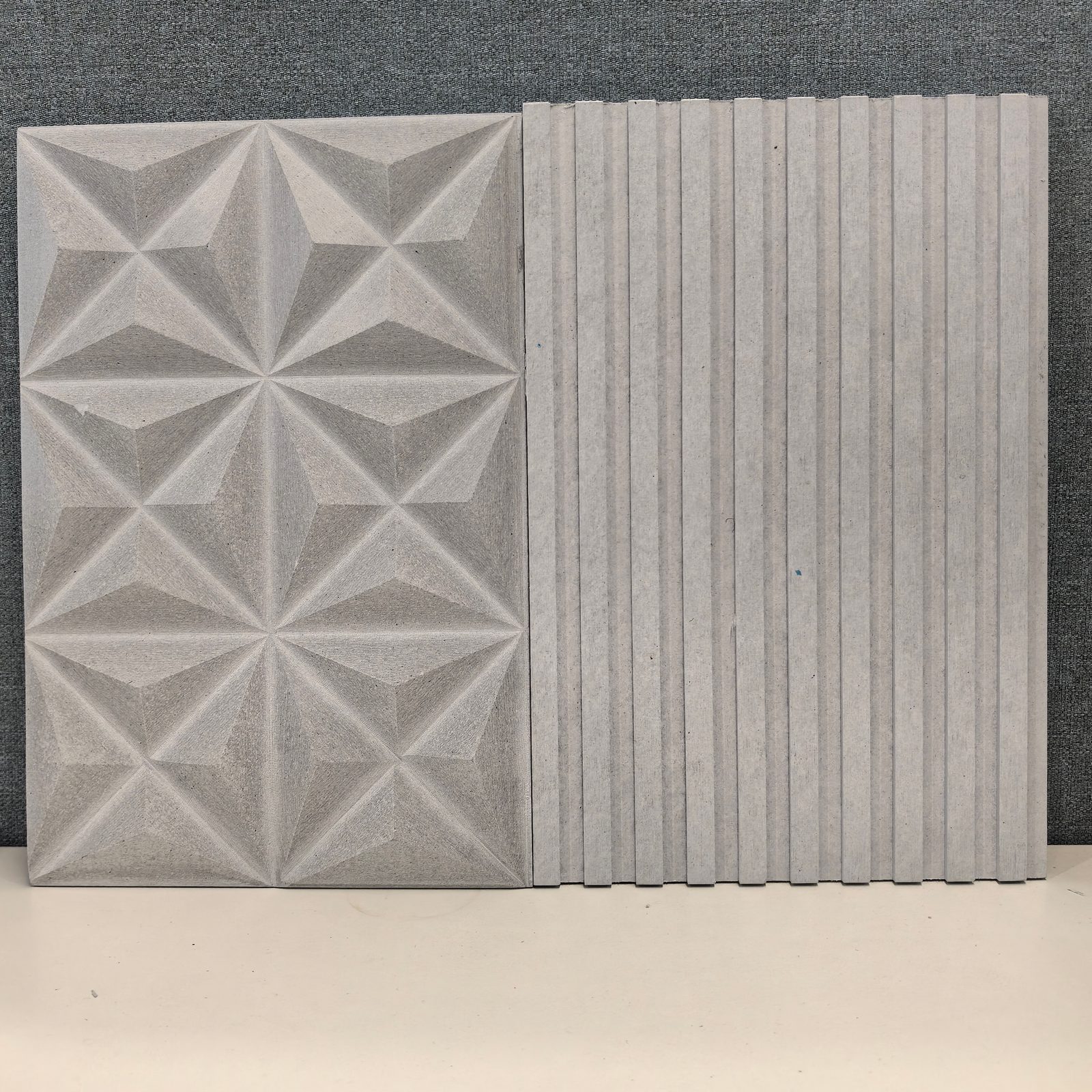
A fiber cement board is cement, silica and fibre, formed and autoclaved. Ours runs 4 to 25 mm at 0.65 to 0.85 g/cm³, is A1 non-combustible to GB 8624 with AQ1 smoke toxicity, and has no organic content to burn. A denser calcium silicate board does the same job where impact or abrasion governs.
The practical complication is that HPL is rarely installed on its own. On a wall it arrives bonded to a carrier — plywood, MDF, aluminium honeycomb, or a mineral board — and the classification that matters belongs to that composite, not to the skin you can see.
| Property | HPL skin (EN 438) | Fiber cement board |
|---|---|---|
| What it is | Paper + thermoset resin, pressed | Cement + silica + fibre, autoclaved |
| Reaction to fire (EN 13501-1) | Typically D-s2,d0 up to B-s1,d0 by grade and thickness | A1, plus AQ1 smoke toxicity to GB 8624 |
| Organic fuel in the panel | Yes — paper and resin | None |
| Usual thickness | 0.7–1.3 mm (compact 2 mm and up) | 4–25 mm |
| Weight, indicative | ≈1.4 kg/m² at 1 mm | ≈5.2–10.2 kg/m² at 8–12 mm |
| Structural role | Skin — needs a carrier | Self-supporting panel on a frame |
| Fire resistance | Depends entirely on carrier and build-up | 8 mm → 1 h, 9 mm → 2 h, 12 mm → 3 h in tested systems |
| Edge behaviour | Edge swelling and decor lift if water reaches the core | No delamination; sealed cut edges only |
| Repair after impact | Localised damage not invisibly repairable | Panel swap on a demountable frame |
Reaction to Fire Is Not Fire Resistance
This distinction resolves most of the arguments in the category. EN 13501-1 classes A1 to F describe reaction to fire — how much a material contributes to a fire that is already happening. A1 is the top of that scale: no contribution. B is not the second-best version of the same thing; B is still a combustible material, just one that is hard to ignite and slow to spread across.
Fire resistance is a different measurement entirely, expressed in minutes and belonging to an assembly: a frame, a cavity, insulation, the boards and the fixings, tested together to EN 1364 or EN 1365. In our tested partition systems, 8 mm on 75 mm steel studs with mineral wool gives one hour, 9 mm gives two hours, 12 mm gives three hours. Those are system results, not panel results, and no laminate datasheet can substitute for them.
Smoke: The Part the Class Hides
B-s1,d0 packs three statements into one string. The s1 means limited smoke production, the d0 means no flaming droplets within the test period, and it is genuinely a good class — it is why so much laminate is approved in circulation areas. What it does not say is how toxic that smoke is, because toxicity is tested separately.
Smoke is the mechanism that turns a small fire into a fatal one, and it is the part of the specification that is most often left blank. Our boards are tested to AQ1, the safe level in GB 8624 smoke toxicity terms, because an inorganic panel has no organic fuel to convert into combustion products. For a laminate the answer depends on the resin system — phenolic cores behave better than melamine — which is precisely why the question has to be asked in writing rather than assumed from the fire class.
What an Approval Actually Asks For
Regulators rarely ask what a material is. They ask what the wall does. In practice the questions arrive in this order:
- Height threshold. Above certain heights many jurisdictions require A2-s1,d0 or better on external walls of residential buildings — the UK amendment of 2018 set 18 m for relevant buildings, with lower thresholds elsewhere. Check the local transposition rather than an old project spec.
- The whole build-up. Cavity barriers at each floor line, non-combustible insulation where required, and a fire strategy that accounts for the void behind the panel.
- The system report, not the panel certificate. A classification report names the specimen, thickness, substrate and orientation that were tested. A certificate that does not match your build-up is not evidence.
- Declaration of Performance. For CE-marked boards the DoP states the reaction-to-fire class actually declared for that product and thickness.
- Indoor air, separately. Fire approval and VOC approval are different files — French A+ and ENF-grade formaldehyde results sit in the second one.
Where HPL Genuinely Wins
An honest comparison has to say this plainly, because specifying is not a loyalty exercise. HPL is the better answer for furniture, doors, cabinet faces and wall protection in low-rise interiors. It is thin and light at about 1.4 kg/m² per millimetre, it takes abrasion that would mark a painted surface, it needs no site finishing, and it is non-porous and easy to sanitise. The press also delivers surface textures — super-matte, soft-touch, anti-fingerprint — that no printed decorative board can reproduce exactly, alongside hundreds of decors and a wood or stone effect that reads convincingly at close range.
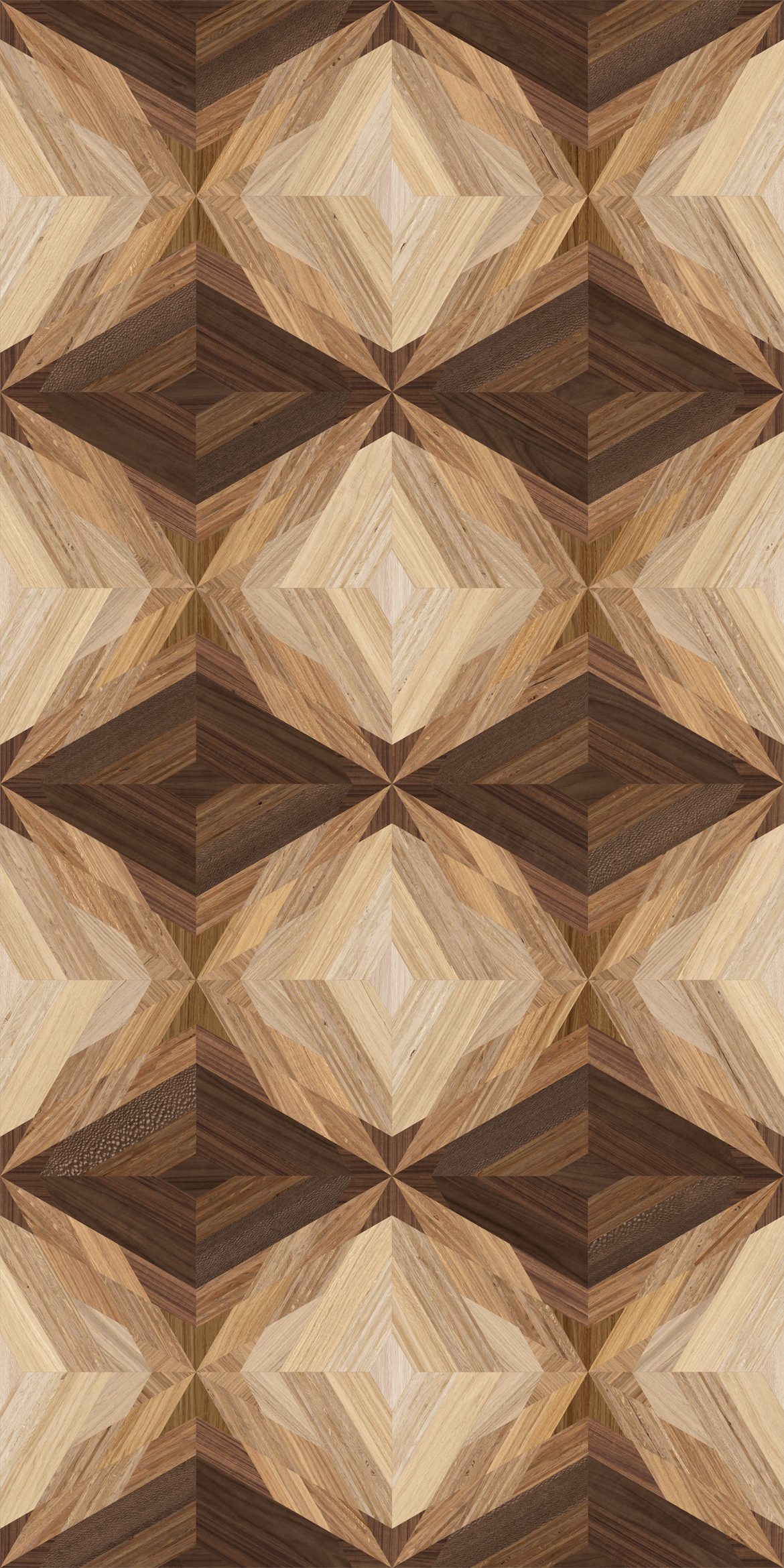
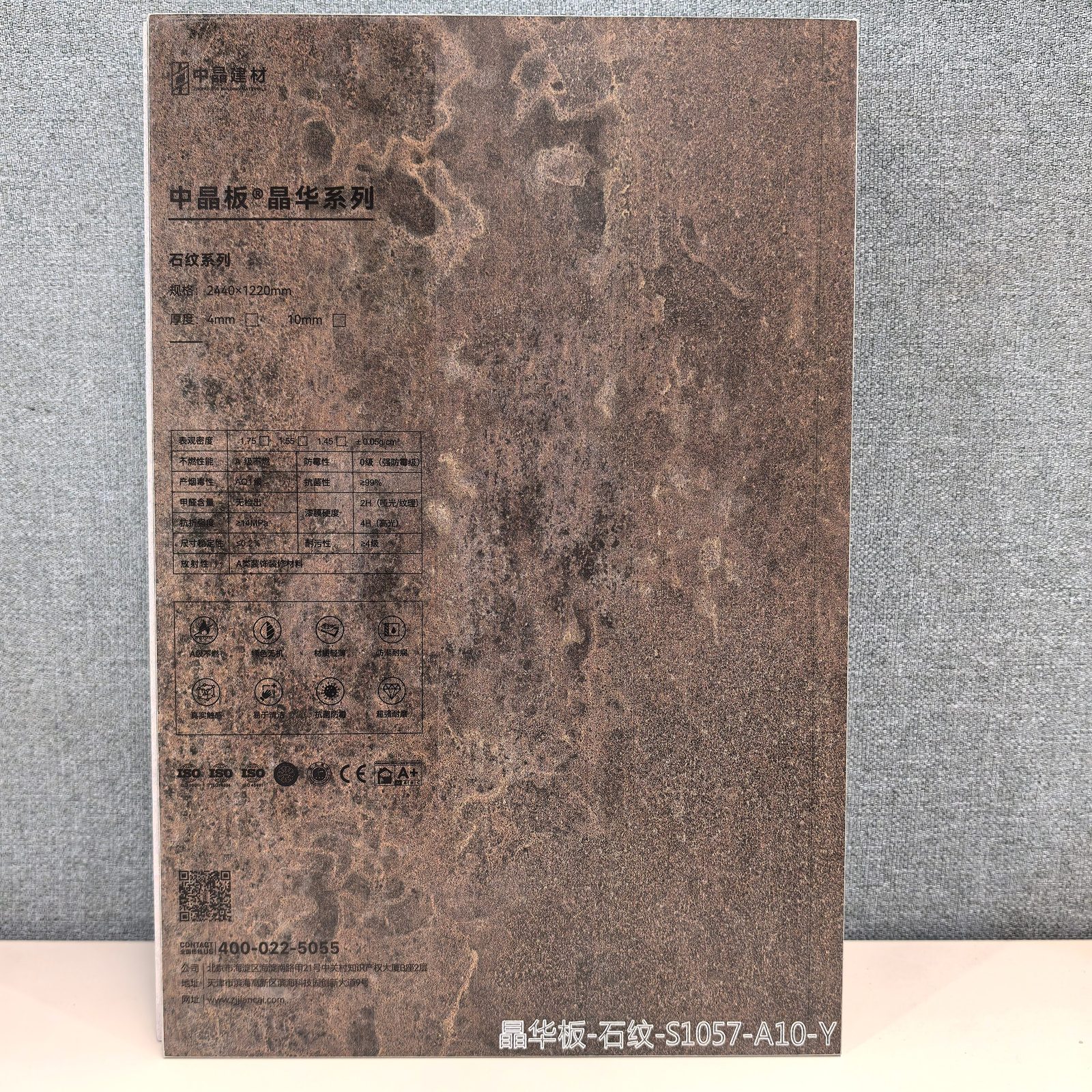
Where a project wants that surface on a wall, the sensible route is a hybrid: the laminate as a face on a mineral carrier, so the section stays inorganic and the classification follows the board. The same logic applies to print. A decorative board carries a wood or stone pattern on an A1 mineral core, which is how a decorative wall panel in a hotel corridor reads as timber without the fuel load of a timber substrate — and why a hospital wall cladding system can be washed down and still carry the fire file.
Where the Skin Runs Out of Road
- The carrier decides the class. A 0.8 mm laminate on plywood is a combustible composite no matter how good the laminate is. The same laminate on a fiber cement board is a different product with a different classification.
- Fuel in the cavity. An organic skin on an organic carrier puts combustible material on both faces of a ventilated void. Where that is permitted, it is permitted conditionally, with barriers and cavity protection.
- Heat and edges. Laminate delaminates and its edges swell if water reaches the core, and swollen edges are where decor lift starts. A sealed and inspected edge is a maintenance item, not a one-off.
- No bracing. A 1 mm skin contributes nothing to racking or point-load resistance. Something else has to do the structural work.
- Repair. Impact damage to a laminate face is localised but visible; a board on a demountable frame is a panel swap.
Choose an Inorganic Wall Panel When
- The wall is on an escape route, a stair or a protected lobby
- The cavity or the insulation must also be non-combustible
- Smoke toxicity has to be stated, not inferred
- The wall also has to be a rated partition or a shaft lining
- The space is wet, humid or washed down — hospitals, kitchens, pools
- You need one substrate to carry print, coating or laminate without changing the fire file
Six Lines That Decide the Approval
None of these are about brand. They are about turning a claim into a document:
- Ask for the classification report and read the specimen description against your build-up.
- State the reaction-to-fire class per component, including the carrier and the insulation, not only the visible face.
- Fix thickness and density together — 0.65 to 0.85 g/cm³ changes weight, screw holding and stiffness — and ask for the DoP. Where abrasion or impact governs, a calcium silicate board is the denser option. Our thickness guide maps the range to applications.
- Detail the cavity: depth, drainage, ventilation at the head, barriers at floor lines.
- Require smoke toxicity data in the same submission as the fire class.
- Keep the indoor air file separate — A+ and ENF for occupied rooms, and a coating or print system that does not reintroduce emissions, as covered in our certification guide.
Frequently Asked Questions
Is HPL fireproof?
No. It is a paper-based thermoset, and its best classes sit in the B range of EN 13501-1, typically B-s1,d0 on a fire-retardant grade. B means very limited contribution, not no contribution: it still pyrolyses, still adds fuel, and still has to be accounted for.
Can an HPL-faced panel be classified A1?
Not the laminate itself, because it is organic. A composite reaches A1 or A2 only where a mineral carrier dominates the section and the assembly has been tested that way — in practice a fiber cement board or a calcium silicate board behind the laminate.
Which produces less smoke?
Read two numbers, not one. Smoke production (s1 to s3) and smoke toxicity are separate tests. A good laminate can reach s1 and still burn paper and resin; an A1 inorganic board tested to GB 8624 carries AQ1 toxicity because there is no organic fuel in it.
Does A1 mean the wall is fire rated?
No. A1 describes reaction to fire — what the material contributes. Fire resistance, in minutes, belongs to a tested assembly: 8 mm reaches one hour, 9 mm two hours and 12 mm three hours in our tested systems.
Is a fiber cement wall panel heavy enough to be a problem?
It is a mass layer of roughly 5.2 to 10.2 kg/m² at 8 to 12 mm, so the frame and the fixings are engineered for it rather than assumed. On refurbishment the same mass is what makes it useful as an acoustic and fire upgrade without demolishing the existing lining.
A laminate is judged on the day it is installed. A wall lining is judged on the night something goes wrong in the room next door. Specify the second job with the second material.
Conclusion
HPL and fiber cement board are not competitors in the same slot; one is a finish, the other is a section that can carry a finish. Where the wall sits on an escape route, closes a cavity, or has to be rated, the decision is made by the fire strategy and the inorganic panel answers it without conditions. Where the surface is the whole point and the wall is not in a protected zone, laminate still earns its place — ideally as a face on a mineral carrier, or replaced outright by a decorative board where the pattern can be printed instead of laminated. Send us the elevation, the build-up and the fire strategy line you are being asked to satisfy, and we will return the board specification, the class and the test reference behind it.