When a facade specification calls for cement-based cladding, two materials usually make the shortlist: GRC (glassfibre reinforced concrete) and fiber cement board. Both are inorganic, both are non-combustible, and both have delivered landmark buildings — but they are made in completely different ways, and that difference drives everything from panel weight to installation speed. Here is an honest, side-by-side look for specifiers.
Two Materials, Two Manufacturing Logics
GRC is a cement-and-sand mortar reinforced with alkali-resistant glass fibres, sprayed or premixed and cast into moulds. The output is a bespoke architectural element: a panel with moulded texture, ribs, and cast-in fixing points. Every new shape means a new mould, and every panel carries the full density of concrete — typically around 1.9–2.1 g/cm³.
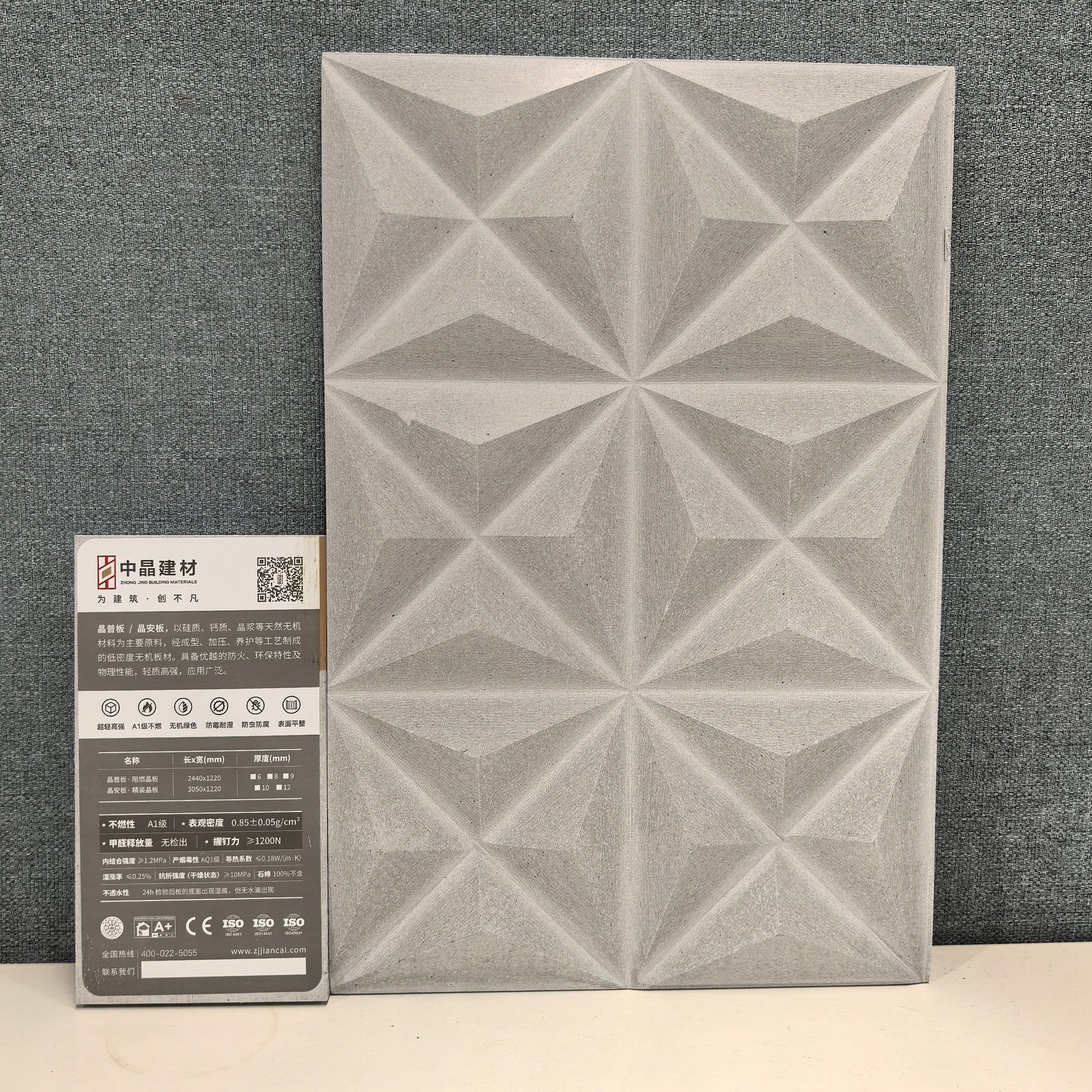
A fiber cement board, by contrast, is a flat sheet product. Cellulose and mineral fibres reinforce a cement matrix that is formed into sheets, pressed at high tonnage, and autoclave-cured. It arrives in standard sizes (1220×2440 mm or 1220×3050 mm) across a 6 mm to 25 mm thickness range, and is cut, drilled, and screw-fixed on site like a panelized lining system. Our low-density lines run at 0.65–0.85 g/cm³, with dense grades up to 1.75 g/cm³ for demanding exterior use.
Side-by-Side Comparison
| Property | Fiber Cement Board | GRC Panels |
|---|---|---|
| Product format | Flat sheets, 6–25 mm, standard sizes | Moulded panels, bespoke shapes |
| Density (typical) | 0.65–1.75 g/cm³ (low-density flagship 0.85) | ~1.9–2.1 g/cm³ |
| Weight (12–15 mm) | ~8–13 kg/m² (low density) | Commonly 25–30+ kg/m² |
| Fire reaction | A1 non-combustible, AQ1 smoke toxicity | Non-combustible (cement-based) |
| Moisture movement | Wet expansion ≤0.25% | Movement and efflorescence to manage |
| Fixing | Screw-fixed to light-gauge studs; ≥1200 N screw holding | Steel subframe, cast-in inserts |
| On-site work | Cut with utility knife; 6 mm bends for curves | Mould lead time; lifting equipment |
| Surface finish | Paint, UV coating, or printed decorative board | Moulded texture, painted |
Weight and Structure: The Quiet Cost Driver
The density gap is the single biggest practical difference. A 12 mm low-density fiber cement board weighs roughly 8–10 kg/m²; a comparable GRC panel commonly exceeds 25–30 kg/m² before you add its steel frame. Over thousands of square metres of wall panel, that gap cascades:
- Substructure. Lightweight sheets screw to economical light-gauge steel studs; GRC needs a heavier, engineered subframe to carry panel self-weight and handling loads.
- Building structure. On renovation and over-cladding projects, lower facade self-weight can mean the existing slab or frame carries the new skin without strengthening.
- Logistics. Lighter sheets mean more square metres per delivery, easier vertical transport, and in many cases single-person handling — a 6 mm low-density sheet is famously a one-worker install.
Fire: Where Both Win — and What Still Differs
Let’s be fair to GRC: it is cement-based and non-combustible, so on fire reaction this is not a David-vs-Goliath story. Both materials belong in A-rated facade palettes. Where the fiber cement board pulls ahead is in tested lightweight fire-rated systems and smoke safety:
- Fire-rated linings. An 8 mm board on steel studs with rock wool achieves a 1-hour rating; 9 mm reaches 2 hours; 12 mm reaches 3 hours — thin, light build-ups that would demand far more weight in concrete-based panels.
- Smoke toxicity. Our boards are certified A1 non-combustible under GB 8624 with AQ1 (safe) smoke toxicity — a distinction that matters in escape routes, hospitals, and schools.
You can watch the non-combustibility test below — no burning, no melting, no dripping.
Moisture, Movement and Long-Term Flatness
Facade materials live outdoors, where rain, humidity and temperature swings never stop. Fiber cement board is dimensionally stable with wet expansion of ≤0.25% and dry shrinkage of ≤0.15%, survives 30-day immersion without delamination, and passes 100 freeze-thaw cycles with ≥80% flexural strength retained. As a fully inorganic material it offers no nutrients for mould — the same reasoning that makes it a reliable wet-area board indoors.
GRC also performs well outdoors — it is concrete, after all. But thin GRC sections demand careful mix design and curing to limit drying shrinkage cracking, and light-coloured cementitious surfaces can develop efflorescence over time. Neither issue is fatal; both are simply items the facade engineer has to actively manage with GRC that a stable sheet product largely takes off the table.
Surface and Finish: Moulded Texture vs Decorative Board
This is GRC’s genuine strength. If the design intent is deep, sculptural relief — saw-tooth fins, organic 3D textures, monumental feature bands — a moulded GRC panel delivers it in a single cast. No flat sheet product fully replicates that depth.
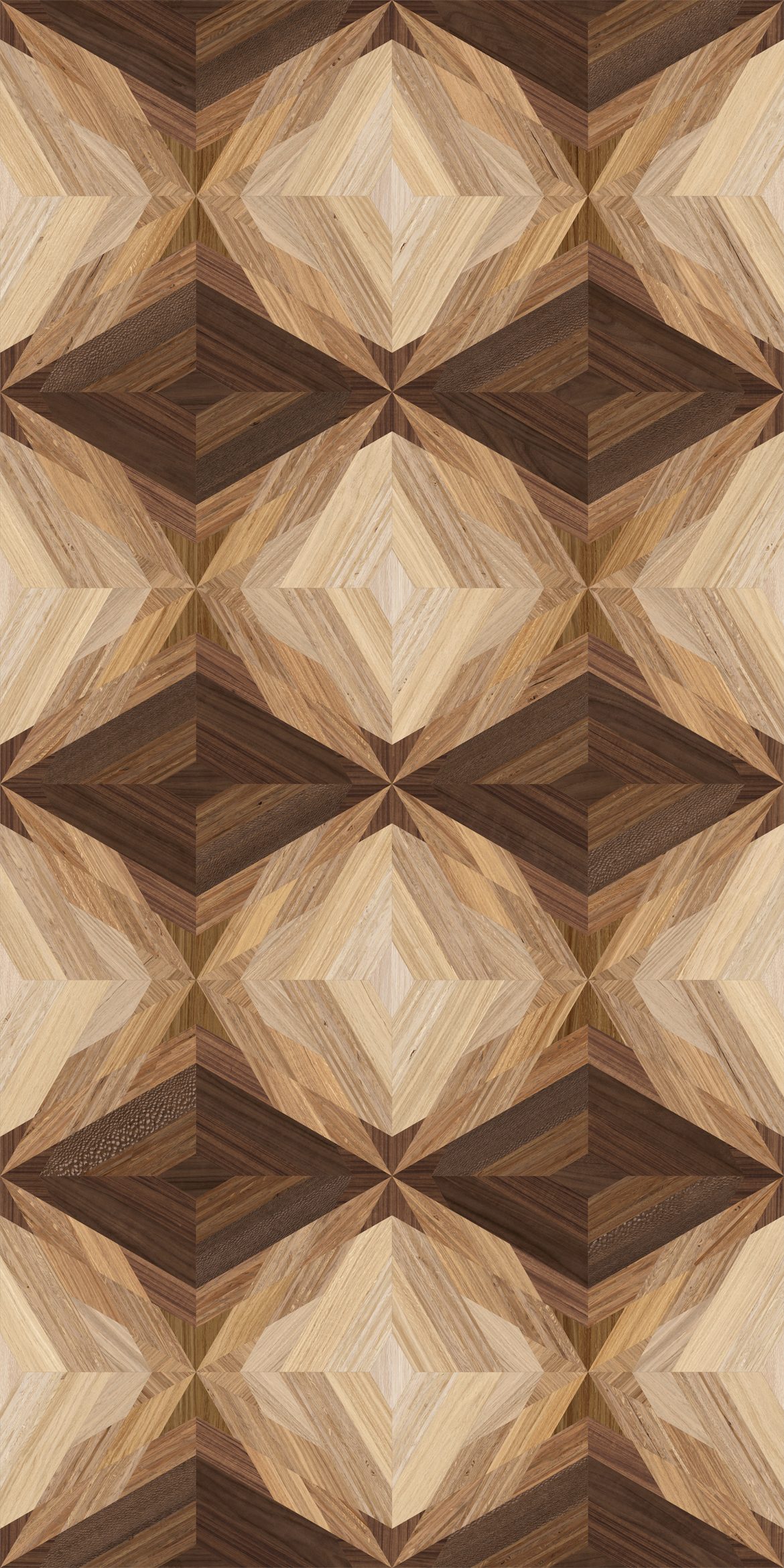
But most facades and interior feature walls are flat or lightly textured, and this is where a modern decorative board changes the economics. The same fiber cement substrate takes factory UV coatings, through-body colour, and digital printing: marble, wood, stone, and custom patterns produced directly on the panel. As a decorative board, it arrives finished — no on-site painting, no texture coats — and because the pattern is printed on a dimensionally stable substrate, the facade stays flat and true in ways cast cementitious panels cannot guarantee. For interiors, the same decorative board logic replaces tile and veneer on feature walls at a fraction of the weight, as our ACP comparison explores.
Installation Speed and Site Reality
Sheet products fit the rhythm of modern construction:
- No mould lead time. Standard sheets ship from stock; a design change mid-project costs a redraw, not a new mould.
- Dry, screw-fixed assembly. Boards fix directly to light-gauge studs with a screw holding of ≥1200 N — one screw reliably carries 15–20 kg.
- Cut-to-fit flexibility. Low-density boards score-and-snap or cut with a utility knife; 6 mm boards can even bend around curved wall panel forms.
- Ready-to-finish surface. Flat, sanded boards accept paint or coating directly, and factory-finished versions skip site finishing entirely.
GRC installation, by comparison, is a lifting-and-alignment exercise: heavier panels, crane time, and precise engagement of cast-in fixings to the subframe. Done well it looks superb — it is simply a slower, more engineered process per square metre.
So Which Material Should You Specify?
Both materials have earned their place. A practical way to divide the territory:
- Choose GRC when the design demands deep moulded relief, bespoke monumental elements, or a monolithic concrete aesthetic, and the budget carries the subframe and crane time.
- Choose fiber cement board for large areas of flat cladding, rainscreen linings, fire-rated walls, partitions, and ceilings — anywhere weight, speed, fire documentation (A1, CE, French A+), and cost control decide the project. Where a calcium silicate board grade fits better for a given humidity or temperature profile, a full-line manufacturer can supply both from one quality system.
Frequently Asked Questions
Is GRC or fiber cement board better for fire-rated facades?
Both are cement-based and non-combustible, so fire reaction alone does not separate them. The difference is in the systems: lightweight fiber cement board linings achieve 1–3 hour ratings (8 mm/9 mm/12 mm on steel studs with rock wool) at a fraction of the self-weight of concrete-based panel systems.
How much lighter is fiber cement board than GRC?
A low-density fiber cement board (0.65–0.85 g/cm³) weighs about 0.65–0.85 kg/m² per millimetre — roughly 8–10 kg/m² at 12 mm. GRC typically runs 1.9–2.1 g/cm³, so comparable panels commonly reach 25–30+ kg/m² before their steel frame.
Which installs faster on site?
Fiber cement board: standard sheets, no mould lead time, cut on site, screw-fixed to light-gauge studs. GRC requires mould fabrication, lifting equipment, and a heavier engineered subframe — superb results, but a slower process per square metre.
When is GRC the better choice?
When deep moulded detail is the design intent — sculptural facade elements, richly textured feature bands, columns, and other 3D architectural forms cast from a mould. For flat cladding, interior linings, partitions, and ceilings, fiber cement board is usually the faster, lighter route.
Conclusion
GRC and fiber cement board are complements more than competitors: GRC owns deep moulded sculpture, while fiber cement board owns the lightweight wall panel and cladding work that makes up most of a building’s skin. If your project lives in the second category — or you want one factory to cover both the structural board and the printed decorative board finishes on top of it — compare our range and put the numbers side by side.